Winter Daytime Lights Are Required Again: What to Check Even in a Car with Automatic Lighting
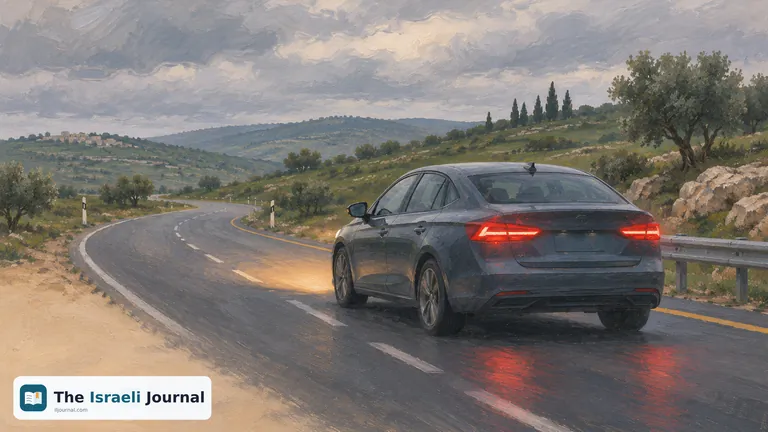
From 1 November 2026, daytime lighting is again required when driving on roads outside urban areas. The seasonal requirement continues through 31 March 2027. For private car drivers, that means checking that the vehicle is illuminated at the front and rear before setting off, even on a bright morning with no rain.
Ra'anana Municipality recalled the rules in a notice published on the day the requirement began. It highlighted something that is easy to overlook in a newer car: lights that switch on automatically at the front do not necessarily mean the rear lights are on too. An illuminated dashboard is not a check of the exterior lighting.
This is the annual application of existing rules. Drivers do not need to wait for an announcement of winter weather, and whether the windshield wipers are needed has no bearing on the lighting requirement. The date, road type and vehicle type determine the daytime obligation.
Who must use lights inside urban areas too
According to Ralbad's vehicle lighting guidance, the winter requirement applies to vehicles on roads outside urban areas. For taxis, buses and trucks with a maximum permitted gross weight of 15 metric tons or more, it also applies on urban roads. Motorcyclists must use lights on all roads throughout the year, so November does not mark the start of their obligation. Ralbad is Israel's National Road Safety Authority.
Pay attention to the term maximum permitted gross weight. It is a vehicle specification, rather than an estimate of the load being carried at a particular moment. Anyone driving an unfamiliar work vehicle should check its classification and specifications instead of judging by its size or appearance alone.
For private cars, the seasonal daytime requirement differs between road types. However, Ralbad recommends using low‑beam headlights everywhere and at all times throughout the year. That recommendation goes beyond the seasonal obligation and can become a regular habit, without having to remember at every turn whether you have left the urban area.
Why automatic mode still needs checking
The municipal notice explains that some vehicles switch on daytime lights only at the front. White lights at the front therefore do not answer the question of whether the required rear lighting is working. Check the particular vehicle you are driving.
Switch settings and dashboard symbols are not identical across all models. The practical approach is to consult the owner's manual and establish what each setting activates. If the explanation is unclear, ask the garage or service representative to show you how to turn on the driving lights and rear lights together.
In a rental car, company car or vehicle shared by several drivers, do not assume the switch is where you left it. Check the lighting after starting the engine as part of your preparation. This is also an opportunity to make sure you know how to restore the appropriate setting after servicing or cleaning.
Check before you start driving
Choose a safe parking place where you can inspect the vehicle without entering a traffic lane. Switch on the lights according to the manufacturer's instructions and check the front and rear. Anyone helping should stand somewhere safe. There is no reason to carry out the check on a road shoulder or while moving.
Look for a light that does not come on, a marked difference in brightness between the two sides, or a fault warning on the dashboard. These are reasons for a professional inspection, rather than repeatedly moving the switch in the hope that the problem disappears. Repairs should follow the manufacturer's instructions and suit the lighting system involved.
Ahead of winter, Ralbad also recommends having the brakes, tires, wipers and steering checked at an authorized garage or vehicle inspection center. Checking the lights at home can reveal an obvious problem; it does not replace a professional inspection of the other safety systems.
Low beams, high beams and fog lights have different jobs
Ralbad's everyday recommendation is to use low‑beam headlights. High beams are intended for other road conditions and can dazzle oncoming drivers or those ahead. There is no need to use them to compensate for a gray day or to demonstrate that the car is illuminated.
A rear fog light is also no substitute for ordinary driving lights. Ralbad explains that it is particularly bright and may be used in fog, heavy rain or snow. Once those conditions pass, switch it off to avoid dazzling the driver behind.
This distinction is especially useful when taking an unfamiliar vehicle. Locate the lighting switch and fog light control in advance, and understand which indicator belongs to each. Searching for the right switch while driving in rain adds a task that could have been completed while parked.
When the journey continues into darkness
The seasonal daytime requirement does not replace the rules for driving in darkness. According to Ralbad, low beams must be used from 15 minutes after sunset until 15 minutes before sunrise; in an unlit place, they should also be switched on when it starts getting dark. There is no need to wait for a winter date to illuminate a journey in darkness.
If you leave in the morning and return in the evening, make lighting part of the same brief check you perform before driving: seat, mirrors, seat belt and lights. If a question arises on the road, stop only somewhere permitted and safe to resolve it, rather than using the shoulder for a routine check.
November's change takes little time to address while parked, but attention needs to cover the whole vehicle. Checking only the front leaves half the question unanswered. Establish what comes on at the rear, learn your vehicle's switch settings and deal with a fault before the next journey.