Public Transport in the Sharon: Where the Train Beats the Car
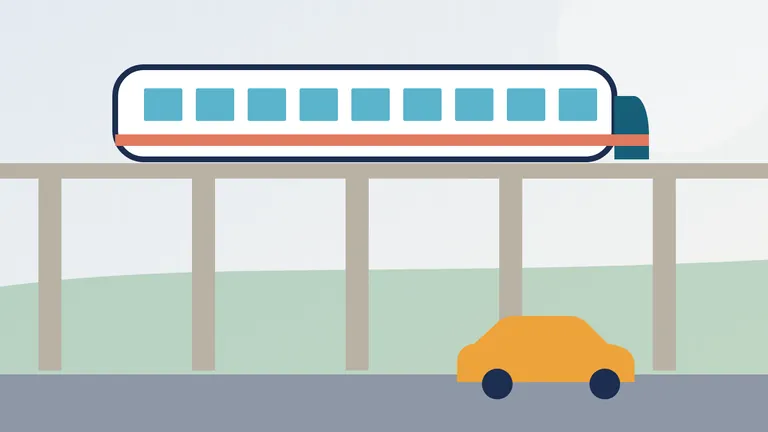
Seven‑twenty in the morning on the Coastal Highway. The car crawls, the radio discusses congestion and the dashboard clock advances faster than the traffic. Alongside it all, a train passes. It moves quickly without stopping, and the people inside read, sleep or look at their phones. Almost every driver in the jam has the same thought: should I have taken the train?
Anyone living in the Sharon knows the morning Coastal Highway. The train south from Netanya looks like the obvious answer. But pause before deciding. The train begins at the station, not home, and ends at a station, not the office. Add the trip to the station, waiting and the bus or walk at the other end, and the picture becomes complicated. Sometimes the train really is faster. Sometimes it is only calmer. That, incidentally, is worth something too.
The measurement mistake
Most people compare train and car unfairly. They remember their worst traffic jam and compare it with the smoothest train journey they imagine, or vice versa. The result is a decision based on feeling.
A proper measurement starts and ends in the right places: leaving home to sitting at your work computer. Use an ordinary midweek day, not a holiday or a day when everyone is away. Include the frustrating moment when you miss the train by a minute and wait for the next one.
How many measurements are needed? Two days are enough to decide whether a two‑week trial is worthwhile. One journey on a quiet day is almost always misleading.
The parking space waiting for you, or not
One detail changes the entire calculation, often discovered only after starting: station parking. A lot already full by eight‑thirty turns the rail commute into two journeys: driving and searching for parking. Sometimes the search takes longer than the traffic jam you hoped to avoid.
Solutions exist but require adjustment. Leave earlier, before the lot fills. Take a neighborhood feeder bus. Cycle or use a scooter, which may work well for reaching the station but not the destination at the other end. If leaving a bicycle or scooter at the station, think about insurance and theft before it disappears.
The financial calculation
What about money? The answer depends on trip frequency. A monthly pass pays off above a certain number of journeys. Below that, a day pass or individual ticket is more flexible and cheaper. Calculate your own number rather than assuming.
Another point takes pressure off many people: you need not give up the car to benefit from trains. You may still need it in the evening, for children's activities or visiting parents. Giving it up entirely is not a condition. Replace three morning journeys a week and feel the difference.
When the train fails
Now for the less pleasant side, because honesty matters. Trains have bad days too. A peak‑time track fault sends everyone back to roads sometimes even busier than usual because all the rail passengers suddenly need alternatives.
How should you prepare? An app with current disruption alerts is far better than a printed timetable. When track works are announced beforehand, working from home, if your employer permits, is worth more than a long wait on the platform.
Next time you sit in traffic and watch a train pass, do not decide out of frustration. Measure. Try two weeks. You may discover a completely different morning, with a book in your hand instead of the steering wheel.