Recycling in Apartment Buildings: Why the Orange Bin Is Not Enough
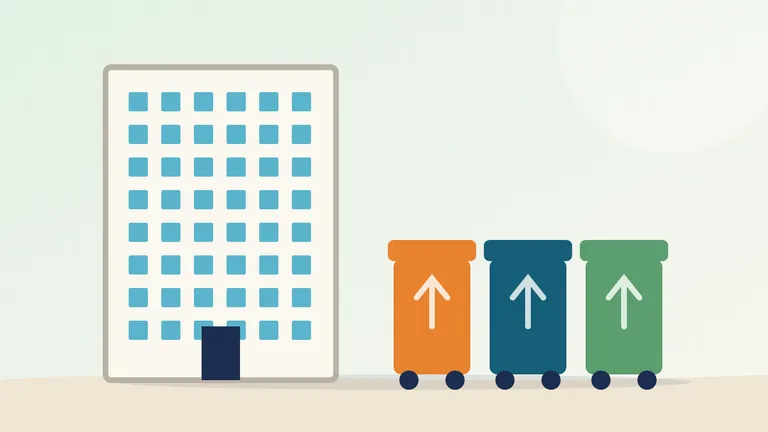
He stood holding the bag in front of the orange bin. It was full to the brim, its lid would not close and someone had already left an ordinary black bag full of containers beside it. For a moment, he considered walking to the next bin two streets away. Then he checked his watch, sighed and threw the bottles into the regular green bin. In one second, all the morning's good intentions were lost.
Most Israeli residents are willing to separate a bottle. They want to do the right thing. But they are much less willing to carry another bag downstairs if the orange bin is full, far away or already mixed with regular rubbish. That is the discovery that surprises many: a building's actual recycling rate is determined far more in the courtyard than in the kitchen.
The people are not the problem
It is easy to blame neighbors. "People do not care." "We have no recycling culture." But look from the outside: if the bin is distant, full or hidden behind a column, even the most committed neighbor eventually gives up. Recycling succeeds when it is easy and fails when it requires effort. That is a planning failure, not a character failure.
What belongs in orange, and what ruins the whole load
The orange bin is for packaging: plastic bottles, containers, bags, cans, milk cartons and juice cartons. One condition makes all the difference: packaging should be empty, relatively clean and dry.
Here is the surprising part: a single bag of food scraps can cause disproportionate damage. At the sorting facility, it dirties surrounding materials and sometimes harms the quality of an entire batch. Good intentions with dirty packaging can therefore do more harm than not separating it at all.
Another small trick with a big effect is flattened cardboard. An unflattened box takes up enormous space and quickly fills the bin, forcing the next neighbor to throw their packaging into ordinary rubbish. Flattened cardboard leaves room for everyone. Three short lines of instructions on the bin work better than any angry post in the building's WhatsApp group.
The building committee: Recycling's quiet hero
If anyone can change the picture in a building, it is the committee, through simple decisions rather than lectures. First, where the bin stands. A bin on the natural route from the entrance to the street gets filled. One hidden behind a column or in a dark corner is forgotten.
Second, collection frequency. A general collection schedule does not always suit a large building. Ask the local authority to change the frequency or add a bin if capacity is insufficient. A large building with only one orange bin produces mixed waste because of straightforward volume calculations, not the residents' bad character.
What does not belong in orange, and why it matters
People put some things in orange bins with good intentions even though they do not belong there at all. Batteries. Old chargers. Small electronic devices. Used cooking oil. None is "packaging."
Batteries and electronics have dedicated collection points, available in most cities but less familiar. Used cooking oil never belongs down the sink. There it becomes a blockage, not recycling. One annual message in the building group listing local collection addresses is worth more than a national campaign no resident saw.
The two‑week experiment
How do you persuade the authority to add a collection or bin? With evidence, not a general complaint. Two weeks of photographs showing the bin full midweek, with dates and times. That is all.
Without photographs, a complaint about a full bin sounds like a matter of preference or one irritated neighbor. With photographs, it looks like what it really is: a capacity problem with a solution. Next time that neighbor stands before the orange bin holding a bag, perhaps there will be room.