Farming in the desert and on central Israel's fringes: what travels from the Negev to your plate
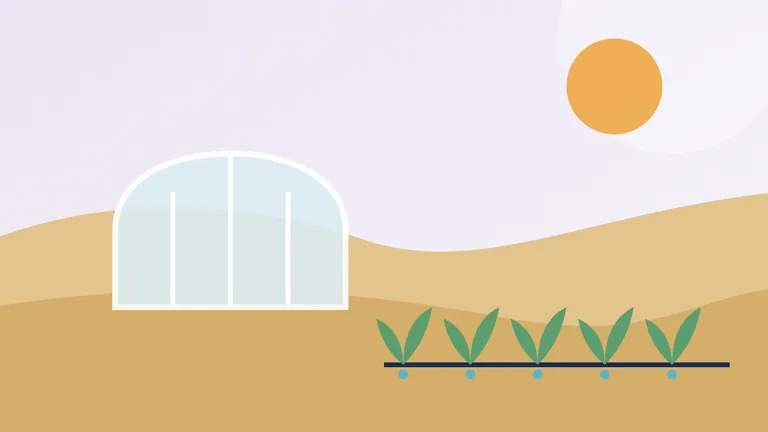
A red cherry tomato at a Carmel Market stall. It looks entirely local, and probably is. But it may well have grown somewhere a casual visitor would call desert: a Negev greenhouse, watered by precise drip irrigation with non‑drinking water, while a small sensor decides when to open the valve. Now it sits on your plate in Tel Aviv, and nobody knows.
Some vegetables in central Israel's markets and supermarkets grow far from the customer. This is no fairy tale about "making the desert bloom," with nostalgic black‑and‑white photographs. It is a daily supply routine, technological and clear‑eyed. When that routine stops because of a heatwave, pest or rise in water prices, you feel it. Not in the news. In the supermarket price.
The thinking greenhouse
Forget the image of a farmer with a hoe under the sun. A modern Negev greenhouse is a laboratory. Sensors measure soil moisture, temperature and light. The irrigation system opens drippers according to need rather than a clock. The farmer often checks conditions from a phone.
This precision is no luxury. Where every drop costs money and the sun can burn an entire crop in one day, it is a condition of survival.
Brackish water: not one invention, but a thousand decisions
One secret of desert agriculture is using brackish water unsuitable for drinking. Does that sound like a magic solution? It is not. Some crops tolerate salinity better than others, and some even develop a sweeter taste in those conditions. But irrigation must be extremely precise, avoiding damage to roots on one side and wasted water on the other.
Israeli research in this field is internationally recognized and exported to many countries. Yet there is a gap worth knowing: the local farmer lives with the calculation anew each season. Water, labor, fertilizers and the market price on harvest day. A laboratory breakthrough is wonderful news. It does not pick the crop by itself.
When heat becomes the enemy
One heatwave can change an entire season. It closes planting windows, damages fruit set (when the flower becomes fruit) and weakens plants already developing. A greenhouse without enough ventilation becomes an oven within hours.
What is done? Not a social post about the climate crisis, but practical measures: shade nets, cooling systems, ventilation and changing sowing schedules so sensitive stages do not fall in the hottest weeks. Consumers eventually see a sparse shelf or high price. Growers see a season cut short.
Why this concerns you
You may live on the tenth floor in Ramat Gan with no connection to farming. Here is the connection: every vegetable you buy comes from one of two sources, local produce or imports. Each has strengths and weaknesses.
Imports fill shortages and can reduce prices. But they also expose the shelf to foreign‑exchange fluctuations, shipping costs and events in another country. Local produce arrives by a shorter, fresher route, but is sensitive to local weather and the next heatwave.
The two supply systems together are more stable than either alone. A policy eliminating one side in the name of this week's price does not erase the risk. It moves it elsewhere, where we will discover it the next time something goes wrong.
What the label reveals and what it hides
Next time you are at the supermarket, look at the label. The growing country, if stated, tells part of the story. It will not tell you how much water went into the tomato or where that water came from. But it will help explain why the same vegetable costs differently in mid‑January and why it disappears from the shelf one week.
That market tomato? Next time you bite into it, perhaps think briefly of the Negev greenhouse, the small sensor and the farmer checking a phone at five in the morning. Its story began very far from your plate.