Desalination and Israel's water system: what happens to your glass when winter is short
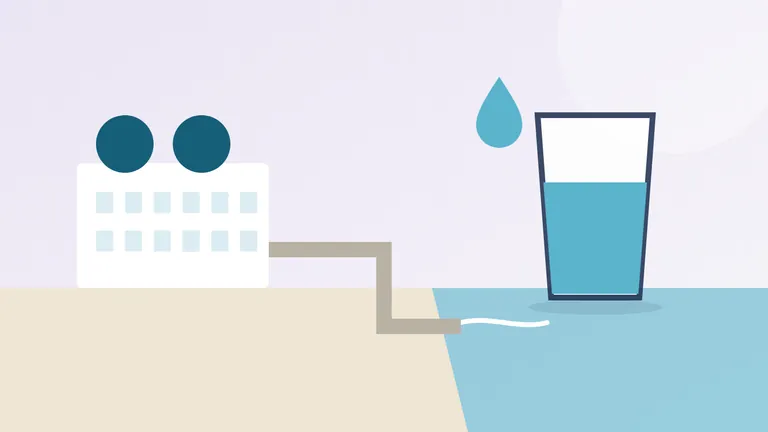
You turn on the tap in the morning, fill a glass and drink. A three‑second action nobody thinks about. But if you followed that water backward, pipe after pipe, you would most likely arrive not at the Sea of Galilee or a spring, but at the coast. At a huge industrial plant where salty seawater is forced through membranes under enormous pressure until it becomes drinkable. This journey, happening every moment beneath our feet, is one of the least‑told stories of everyday life in Israel.
Someone opening a tap in Ramat Gan or Netanya does not see the sea. They see clear water. Behind it stands a system in which a large share of water is desalinated, treated and supplied from coastal plants. A poor rainfall year that once would have triggered national panic now changes the Sea of Galilee's level and the media discussion. It should not turn off the shower. This is not luck. It is the result of decisions made years ago.
From drought to a flowing tap
Anyone who grew up in Israel decades ago remembers the campaigns: "Every drop counts," yellow lawns, instructions not to wash cars with a hose. The country lived with a sense of scarcity. Gradually, large desalination plants were built along the coast and the equation changed. Water no longer depended only on the sky.
That does not mean the problem disappeared. It means it moved somewhere less visible. Almost nobody talks about that.
Why do we still count centimeters in the Sea of Galilee?
If most drinking water comes from the sea, why does the news still lead each winter with the Sea of Galilee's level? Because it is a measure the public understands. You can see it, photograph it and compare it with last year. But it is also far more than a symbol.
The Sea of Galilee is a source alongside desalination, not a substitute. Agriculture, nature and the water system's operational backup remain tied to it and to groundwater. A healthy rise after a storm does not remove the need for plants. It eases operations, releases water for agriculture and nature, and provides breathing room. The lake and sea work together; a good year for one does not remove the need for the other.
The electricity hidden in your glass
Here is the detail that turns a glass of water into an energy question. Desalination consumes electricity, a great deal of it. Forcing seawater through membranes requires powerful pumps running around the clock. When electricity is expensive or generated through more polluting methods, the quiet water in the tap carries a cost elsewhere: in the national bill and in the air.
Technology has improved over the years, and plants use less energy per cubic meter than before. But the basic connection remains. Saving water at home is therefore not nostalgia for the days of "Every drop counts." It reduces the load on a system that costs money and energy to operate every day.
Two entirely different droughts
Talk of "drought" sometimes suggests we are all in the same boat. In reality, there are two boats. Drought is felt first in the field: agricultural water allocations, decisions about which crop to plant and whether the season will pay at all. The household tap is better protected because domestic supply has clear priority.
Public debate becomes confused when these situations are presented as the same shortage. A farmer in a valley and a fourth‑floor resident in Givatayim share one water system but not the same risk. Understanding this also explains why vegetable prices can move in a dry year even while the shower works normally.
The water bill: science at its most domestic
Now to where you come in. Most people look at only one line on the water bill: the amount due. But it contains much more interesting information. Unusual consumption compared with the same season last year almost always reveals one of two things: a leak or a new habit.
Try a small experiment: one night, when nobody is using water, check the meter before bed and again in the morning. If it moved, something is leaking. A quietly leaking toilet cistern can waste surprising quantities. Repairing one leak saves more than any conservation campaign you see on television.
This science needs no laboratory. It needs a number, a comparison and sometimes a plumber. Next time you fill a glass, perhaps you will briefly think about its journey: from the waves, through pumps and membranes, to the kitchen tap.