Hot Jazz opens in Haifa and Be'er Sheva: Niki Haris and Denny Ilett in Blues into the Night
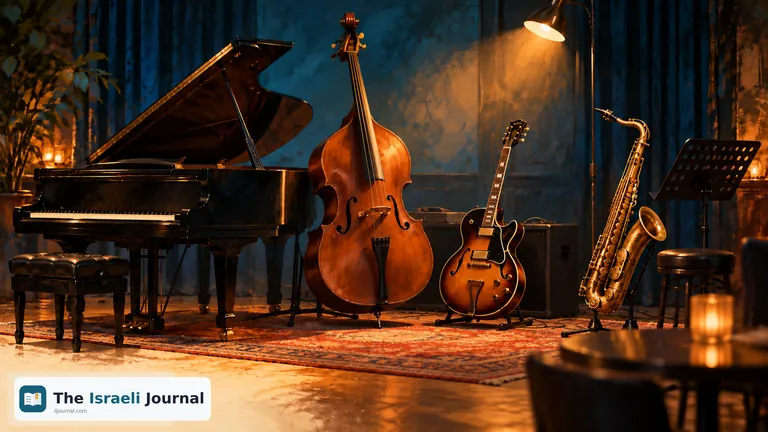
The Hot Jazz series will open its 2026 and 2027 season with "Blues into the Night," featuring singer Niki Haris, guitarist Denny Ilett and wind player Pete Long alongside Israeli musicians. The tour starts at Beit Abba Hushi in Haifa on 24 October at 21:00 and reaches the Performing Arts Center in Be'er Sheva the next day at 20:30. It offers a chance to hear the opening show in the north and south without necessarily traveling to Tel Aviv.
The production's official box offices also list different local prices: NIS 169 to NIS 189 in Haifa and NIS 153 in Be'er Sheva. Both sales pages give a running time of one hour and twenty minutes. Choose the city and date first, then compare prices and conditions, rather than relying on a general national range.
A singer, guitarist and wind player meet an Israeli trio
According to the organizers' program, Haris will sing, Ilett will play guitar and sing, and Long will play clarinet and saxophone. They will be joined by Hila Kulik on piano, Assaf Hakimi on bass and Doron Raphaeli on drums. The ensemble combines voices and wind instruments with a foundation of piano, bass and drums; it is not built as a singer performing to a backing track.
The biography published by the production mentions Haris's work with Madonna and her jazz and soul career. Familiarity with her backing‑vocal work may be an entry point, but this show focuses on blues and jazz. The published program does not promise an evening of Madonna songs, so tickets should not be chosen on the assumption that this is a pop tribute show.
The organizers describe Ilett as a British guitarist and bandleader, and Long as a musician and arranger working in Britain. They bring distinct roles to the same ensemble. Even for someone unfamiliar with the names, the instrument list reveals something about the evening's structure: singing is not the only element, and piano, wind instruments and rhythm all have a place in the musical encounter.
What the show's name promises and what remains open
The organizers describe the evening as a meeting of blues, jazz, soul and swing. These are style descriptions, not a set list. The show pages examined do not specify a final program of pieces, so anyone attending for a particular work should ask the production whether it is included. A performance video of one participant also does not necessarily show what will be played in Israel.
For someone used to choosing shows by familiar songs, this is a slightly different way to plan an evening. Choose by ensemble and style, listen to the participants' performances beforehand and keep an open expectation of the program. It requires no prior jazz knowledge. It simply helps avoid a gap between what the ticket promises and what the audience member imagined from a name or video.
The eighty‑minute running time is useful too. It helps estimate the evening's framework, but excludes entering the venue, getting settled and leaving. These pages do not publish a detailed schedule of intervals or an encore. Anyone relying on a lift or train should leave a margin rather than book the return for the exact minute the advertised running time ends.
The northern and southern stops, and the rest of the tour
The Haifa show takes place on Saturday evening, 24 October, at Beit Abba Hushi. In Be'er Sheva, it is scheduled for Sunday, 25 October, in Hall 1 of the Performing Arts Center. Residents of both regions receive the first two stops on the national itinerary. Check that the selected ticket is for the intended city, because the show's name is identical at every stop.
The production then lists performances in Modi'in on 26 October, Gray Tel Aviv on 27 October, Kfar Saba on 28 October, the Tel Aviv Museum of Art on 29 and 30 October, and Ganei Tikva on 31 October. The Hot Jazz performance schedule brings together links to the different dates.
For the Modi'in and Gray Tel Aviv shows, different sections of the same production webpage display different times. Anyone choosing either stop should check the start time on the ticket and booking confirmation and ask the production if a discrepancy remains. In Haifa and Be'er Sheva, start times match between the tour program and dedicated sales pages.
If booking for others, give them the venue name and city as well as the show title. This is especially important on a tour where the same ensemble plays several places within a few days and some stops in the same city use different venues.
Single tickets, packages and planning the journey
The Haifa and Be'er Sheva sales pages say the show is also available as part of a package. That does not mean every single‑ticket buyer qualifies for a subscription price, or that the package costs the amount shown beside one show. Anyone interested in a whole season should check how many performances are included, at which venue and under which seating arrangement.
Even the first two stops do not have identical prices. The amount shown for Be'er Sheva is below Haifa's range, but traveling to another city adds time and sometimes expense. The practical comparison covers the whole evening: ticket, transport and the ability to get home. Before paying, also check whether the final amount includes every component of the transaction.
Anyone needing an accessible place, a companion or a seating adjustment should contact their chosen venue, because these are different buildings. Check ticket‑change and cancellation policies with the purchasing channel too. This keeps the focus on the music: a shared ensemble beginning in Haifa and Be'er Sheva, allowing audiences to choose the stop that suits them during a week of performances around the country.