The 26th Knesset convenes today: what happens at the opening and why the government is not changing yet
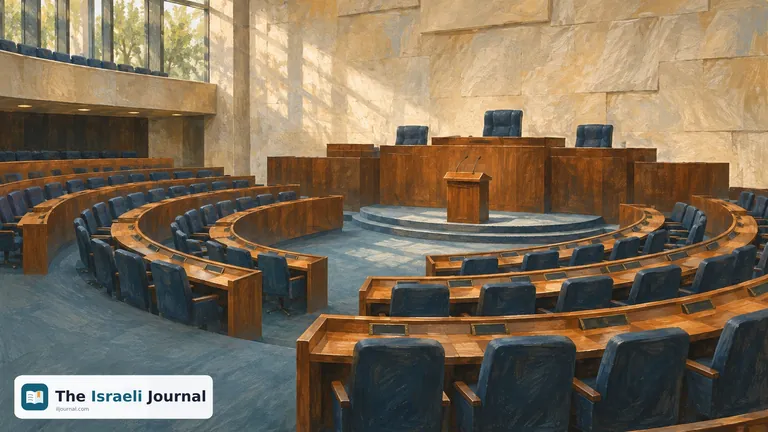
Israel's 26th Knesset, its parliament, is due to convene today, 10 November 2026, for an opening sitting at 4 p.m., when its 120 members will pledge allegiance. The occasion comes two days after President Isaac Herzog tasked Gadi Eisenkot with forming a government. For the public, these are separate stages: parliament assembles in its new composition, but a new government takes office only after being presented to it and receiving its confidence.
According to Ynet's report on the day's proceedings, Herzog will open the sitting before handing over to the Knesset speaker. Members will be called to pledge allegiance individually. This occasion centers on the elected representatives themselves; it does not present a new list of ministers or settle negotiations between the parties.
That distinction matters for anyone trying to understand whether the election result has already produced a change of government. A parliament has been elected, a candidate has received an assignment from the president, and agreement on a government is still needed. Progress on one track does not replace the decision required on the other.
What is scheduled for the opening day
According to Ynet, proceedings in the chamber will begin at 4 p.m. in the president's presence. That is the main time to note for viewers following the pledges of allegiance. Preparations, photographs and meetings in the building take place separately from the sitting, so early pictures do not mean the proceedings in the chamber have already concluded.
The occasion is also separate from a confidence vote in a government. A lawmaker's pledge concerns their role as an elected representative, whereas forming a government requires another parliamentary procedure. Viewers should distinguish the ceremonial sitting from a future announcement setting out a government's members, policy guidelines and allocation of ministerial responsibilities.
Headlines about the next Knesset speaker also require a distinction between political agreement and an official outcome. Ynet reported that Eisenkot and Avigdor Liberman had reached understandings on the matter. At the time of that report, the candidate had not been officially named, and the possibility of someone from the Yashar party was presented as an assessment. That is not an announcement that a parliamentary election has already taken place.
The mandate has been granted; recommendations are not a coalition
Sunday's announcement from the President's Office confirmed that Eisenkot received the task of forming a government on 8 November. This is the development since the announcements preceding the ceremony, which concerned the intention to assign him the role. He now has a formal task, rather than merely being a possibility under consideration during consultations.
The President's Office had previously published the recommendation count: factions representing 67 lawmakers recommended Eisenkot, factions representing 46 recommended Benjamin Netanyahu, and a faction with seven members recommended no candidate. Those numbers describe the answers given to the president during consultations.
They are not an agreed list of parties that will sit together in government. Recommending a candidate supports their attempt to form a government; it does not set out conditions for joining, ministerial allocations or policy guidelines acceptable to those making the recommendation. The figure of 67 therefore cannot automatically be treated as the size of a future coalition.
At the ceremony, Herzog asked Eisenkot to work toward a stable government serving the entire public. That was an appeal by the president to the parties and to the candidate receiving the task. It does not confirm that an agreed formula has been found, or determine which parties will be included if a government is formed.
How much time Eisenkot has
Under the President's Office's official explanation of government formation, the first candidate has 28 days. The president may extend that period in increments totaling no more than another 14 days. An extension is possible, but is not automatically added to the initial period.
The statutory period must therefore be distinguished from the date by which the parties hope to conclude their talks. Announcing a meeting, progress or a desire to form a government quickly does not itself change the timetable. Today's swearing‑in of the Knesset does not restart the count either.
If the candidate completes the formation of a government, they must notify the president and the Knesset speaker. According to the President's Office, a sitting to constitute the government is scheduled within seven days of that notification. This is a further stage after political agreement, so an announcement of successful negotiations is not itself the start of the ministers' terms.
What a new government needs before taking office
The Knesset explains that the proposed government appears before it, presents its basic policy guidelines, membership and distribution of ministerial responsibilities, and asks for its confidence. The prime minister and ministers begin their terms when the government is constituted after receiving confidence. Until then, the outgoing government continues to perform its duties.
In practical terms, the public needs to look for substance alongside names. An announcement of a possible partnership addresses who might participate; the policy guidelines explain what the government seeks to advance; and the confidence vote determines whether it takes office. These are three separate questions even when news reports place them under the same headline.
The same applies to promises concerning household finances, services or rights. Receiving the mandate does not itself establish a new price, benefit or date for changing a public service. To understand what applies to a particular household, readers need to examine the relevant decision and its conditions, rather than relying on an expression of intent during negotiations.
If the first attempt fails
The President's Office also sets out the options following failure: the president may assign the task to another lawmaker who agrees to accept it, or inform the Knesset speaker that he sees no possibility of forming a government. A second candidate receives 28 days, without an extension of that period.
Later in the process, a 21‑day window may open in which a majority of lawmakers can request in writing that the task be assigned to a consenting member. A candidate on this track receives 14 days. These are legal procedures available if needed, rather than a prediction that the current negotiations will fail.
At our check ahead of publication, the unresolved question was who would agree to support the same government and on what terms. Today is expected to bring a clear stage in the parliamentary calendar. The stage determining who will lead the government still depends on completing its formation and winning the confidence vote, rather than on lawmakers' pledges of allegiance.
Read also: Eisenkot expected to receive Herzog’s mandate as divisions within his bloc persist