Domestic travel during Hol Hamoed: where to go when the coast is crowded
Eight thirty in the morning on the coastal highway. Traffic is at a standstill, the children in the back have already asked "are we there yet?" three times, and Waze's arrival estimate grows every minute. At the famous attraction's parking lot, earlier arrivals are already hunting for a space. At that very moment, a short drive from home, there is a shaded, quiet path almost entirely empty. How do you find it?
The Tishrei holidays fill roads to the coast and parking lots at major attractions. Residents of Netanya, Herzliya, Ramat Gan or Petah Tikva need not drive three hours to "get out of the house." Good domestic travel during Hol Hamoed, the intermediate days of the holiday, is often within an hour of home. There are just two conditions: leave early and choose somewhere shaded.
The secret of the beach: not at noon
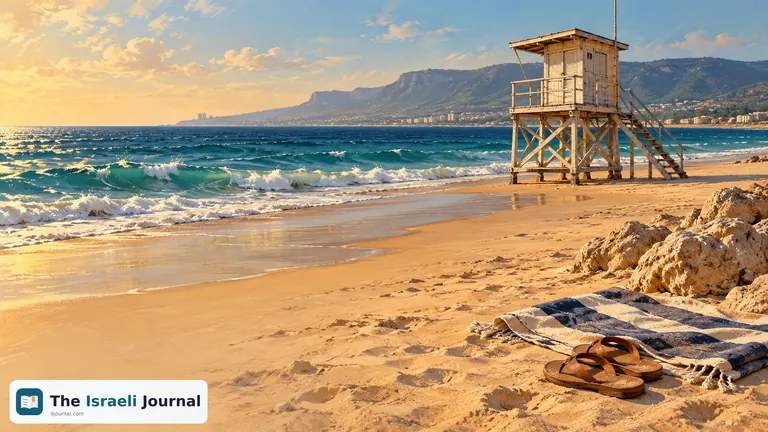
The beach during Hol Hamoed is an excellent idea at the wrong time. At noon it is hot and crowded, and parking has become a competition. But stretches in the Sharon and Hof HaSharon quieten after four in the afternoon, when the sun softens and morning families are already heading home.
A family arriving at opening time, walking along the water for an hour and finishing before the heat preserves both the day and everyone's mood. Another small detail saves frustration: small parking lots fill later than beaches with organized entrances, but do not always have space. Check in advance for a nearby paid lot rather than assume a side street will suffice. On a holiday, the side street is thinking exactly like you.
An hour's walk is worth more than a two‑hour queue
Here is what surprises most families who try it once: children remember the stream more than the ride. Stream routes in the Shfela, metropolitan parks and cycle paths along the Yarkon or Ayalon absorb large crowds without collapsing. There is room to run, stop and throw a stone into the water.
The advantage over an amusement park is clear: no ticket and no queue. The drawback? Preparation is needed. Water, a hat, a snack and a backup plan if a strong wind blows or the path is busier than expected. Remember, Israeli autumn still means sunshine. Not coats or boots. Sunscreen remains part of the picture.
Food: part of the outing, not punishment in a queue
How many holiday meals have ended in a long wait at a counter, with a hungry child in one hand and a phone in the other? Urban markets are particularly busy on the Friday of Hol Hamoed. Midweek lunchtime is calmer, especially in a medium‑sized city rather than central Tel Aviv.
The simplest trick is to book a table at a local place rather than search for a restaurant "when we get there." Traveling with children is less stressful when the meal is arranged and the walk is flexible. The reverse, a meticulously planned outing and improvised meal, almost always ends in the same place: a queue with tired children.
A day budget that does not quietly grow
Do the arithmetic for a moment. Fuel, parking, admission to one place, food. That is the whole bill for a good day. Why do holiday outings become so expensive? Another attraction gets added "since we're here," then another ice cream and another parking lot. A day built on two paid attractions becomes expensive without becoming better.
The formula working for most families is almost embarrassingly simple: one outdoor route, one good meal and home at a reasonable hour. It leaves tomorrow free and the budget intact, instead of everyone tired and angry in traffic on the return road.
A backup plan, because one is always needed
If you arrive and the place is full, that is the moment to beat the holiday rush. Before leaving, choose two nearby alternatives: an urban park, public library, small museum or shaded garden. When the first plan fails, you do not start searching Google in the parking lot. You simply head to the alternative.
Ultimately, the children will not remember how many kilometers you drove. They will remember everyone sitting in the shade beside the water, eating sandwiches brought from home and realizing that you need not travel far to feel you have gone somewhere.